


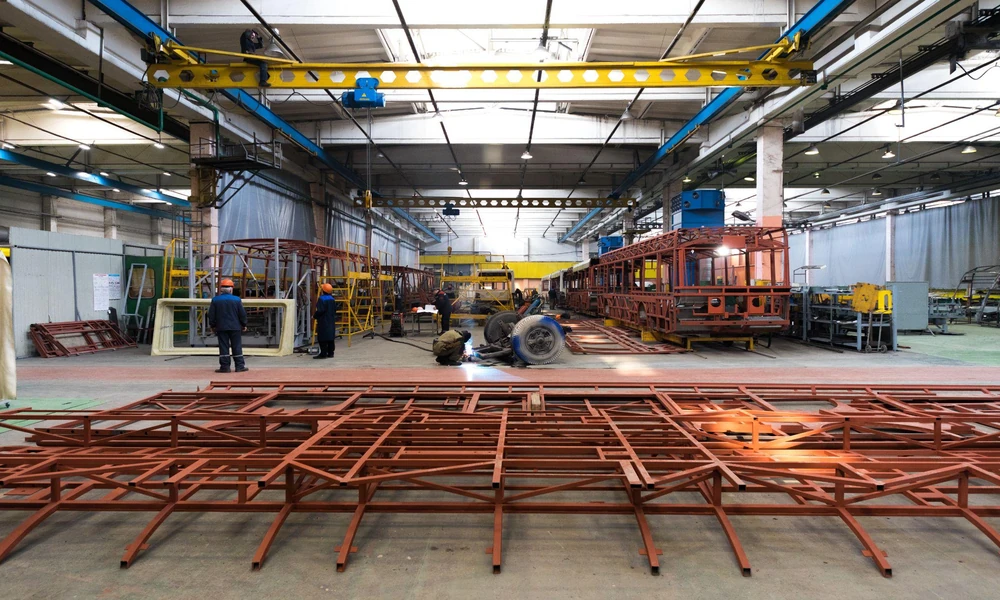
Material handling problems often appear gradually. Workers may take longer to move heavy items, equipment may become difficult to position and production areas may experience repeated delays when materials need to travel between workstations. These issues do not automatically mean that an overhead crane is necessary, but they can indicate that the existing lifting and movement process deserves closer review.
An overhead travelling crane can provide coverage across a defined facility area, making it relevant where loads regularly need to move between multiple locations. The following signs can help facility operators identify when their current process may no longer match operational requirements.
1. Heavy Loads Require Frequent Movement Across the Facility
A clear sign appears when heavy materials repeatedly need to travel between different parts of the same workspace. If workers must regularly move loads from storage to production areas, between workstations or towards loading points, the existing handling method may create unnecessary delays.
Review the complete route each load follows. Consider how often the movement occurs, how long it takes and whether workers need to wait for other equipment to become available.
An overhead travelling crane may be worth assessing when the facility requires repeated movement across a defined area rather than occasional lifting at one fixed point.
Key Signs to Review
- Heavy loads regularly move between several work areas.
- Ground-based handling equipment creates congestion.
- Workers spend significant time waiting for lifting resources.
- Materials require repeated repositioning during handling.
- Changes in production have increased movement requirements.
2. Ground-Level Equipment Creates Congestion
Forklifts and other ground-based handling equipment may share routes with workers, storage and production activities. As material movement increases, these shared areas can become congested.
Review whether handling equipment frequently waits for access or needs to take indirect routes around obstacles. Consider whether regular lifting activity contributes to congestion in already busy parts of the facility.
An overhead crane may provide an alternative route above the working area where the facility layout and operational requirements support such an arrangement. However, operators should first assess the building conditions and the full movement requirements.
3. Workers Experience Repeated Delays During Load Transfers
Waiting can become a regular operational problem when lifting equipment serves several departments or cannot reach the required locations efficiently.
Observe where delays occur. Workers may wait for equipment, for another team to complete a transfer or for a route to become available. Repeated delays can indicate that the existing handling process does not provide sufficient coverage for current operations.
An overhead travelling crane may be relevant when loads require predictable movement across multiple points and the facility would benefit from dedicated lifting coverage.
4. Loads Need Frequent Repositioning
Repeated repositioning can make a handling process longer and more complicated. A load may need to be lifted, placed temporarily, moved again and then positioned at its final destination because the available equipment cannot complete the full route directly.
Review how many handling stages a typical load requires. Some steps may be necessary because of the production process, while others may result from limitations in the current equipment or facility layout.
If loads regularly require multiple transfers solely to reach their destination, the material handling process may benefit from a review of its available lifting coverage.
5. Production Changes Have Increased Material Movement
Operational requirements can change over time. New machinery, increased production, different materials or revised facility layouts may create more lifting activity than the existing system was designed to support.
Compare the current handling process with earlier working patterns. Identify whether load weights, movement distances or the number of transfers have increased.
These changes do not necessarily require an overhead crane, but they can indicate that the facility should reassess whether its current approach remains appropriate. A structured review can clarify what lifting coverage the operation now requires.
Conclusion
Material handling should evolve with the facility’s actual workload. Frequent movement of heavy loads, congestion, repeated delays, unnecessary repositioning and increased production demands can all indicate that the existing process needs closer assessment.
The most useful next step is to map how materials move through the facility and identify where the current system creates operational constraints. This can help determine whether an overhead crane or another lifting arrangement better suits the available space and handling requirements.
Contact Shin Guan to review your material handling process and discuss whether an overhead travelling crane may suit your facility’s lifting and movement requirements.
